Post
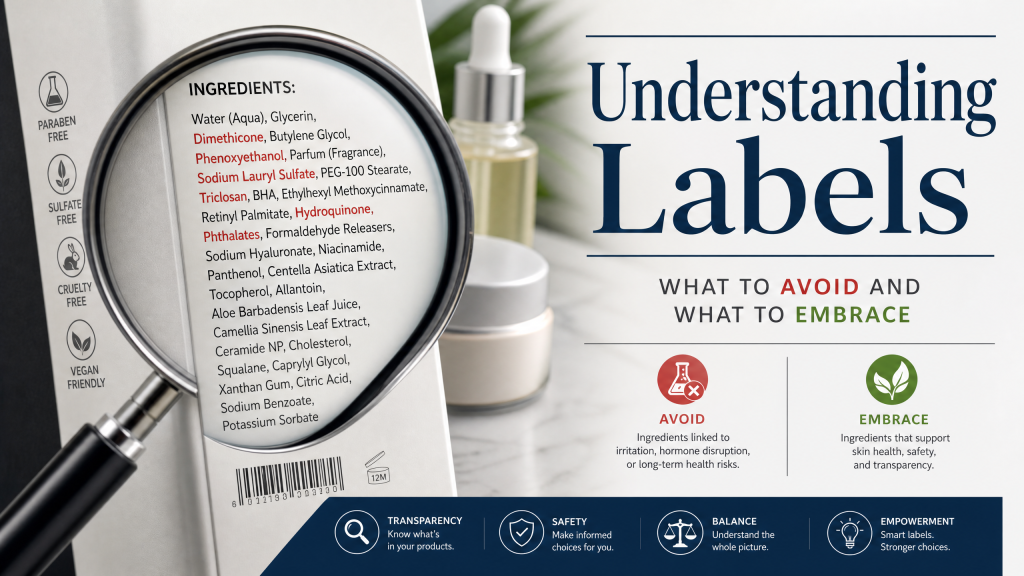
Understanding Cosmetic Labels: What to Avoid and What to Embrace
Jun
Understanding Cosmetic Labels: What to Avoid and What to Embrace
In the bustling world of beauty, where countless products promise everything from eternal youth to flawless skin, navigating the shelves can feel like an overwhelming task. Every bottle, jar, and tube comes adorned with a list of ingredients that, to the untrained eye, often resembles a foreign language. Yet, understanding cosmetic labels is perhaps the most crucial skill a modern consumer can possess. It’s the key to protecting your skin, safeguarding your health, and ensuring you get true value for your money.
This comprehensive guide is designed to demystify the complex world of cosmetic ingredient lists. We’ll break down the jargon, highlight what to scrutinize, and illuminate the beneficial components that your skin will thank you for. By the end of this article, you’ll be empowered to make informed, confident choices, transforming you from a passive consumer into an active advocate for your skin’s health and beauty. Let’s peel back the layers and uncover the truth behind the labels.
Decoding the Cosmetic Ingredients List: A Primer
The first step to becoming a savvy cosmetic consumer is understanding the structure and terminology of an ingredient list. This information is typically presented according to specific regulations, most notably the International Nomenclature of Cosmetic Ingredients (INCI) system. Knowing a few basic rules can make all the difference:
The INCI System: Your Chemical Rosetta Stone
- Standardized Names: INCI names are internationally recognized scientific names for cosmetic ingredients. This standardization allows consumers and professionals worldwide to identify ingredients consistently, regardless of brand or country of origin. For example, Vitamin C might appear as “Ascorbic Acid” on an INCI list.
- Botanical Extracts: Plant-derived ingredients often list the Latin botanical name followed by the common name in parentheses (e.g., Aloe Barbadensis Leaf Juice).
Order Matters: Concentration Is Key
Cosmetic regulations dictate that ingredients must be listed in descending order of concentration. This means:
- Top of the List: The first few ingredients make up the bulk of the product. These are usually solvents like water (Aqua) or emollients.
- Middle of the List: This is where you’ll find the primary active ingredients, humectants, and other functional components.
- Bottom of the List: Ingredients present at concentrations below 1% (like preservatives, colorants, fragrances, and some potent active ingredients) can be listed in any order. If a product boasts a specific “star” ingredient, but it’s near the very end of the list, its actual impact might be minimal.
By understanding this basic structure, you can quickly assess whether a product’s marketing claims align with its actual formulation.
Ingredients to Approach with Caution (What to Avoid)
While many cosmetic ingredients are perfectly safe and beneficial, certain compounds have raised concerns due to their potential to irritate skin, disrupt hormones, or cause other adverse effects. Being aware of these can help you steer clear of products that might do more harm than good.
Parabens (e.g., Methylparaben, Propylparaben, Butylparaben)
Why avoid: These are common preservatives that prevent bacterial and fungal growth. However, they have been linked to potential endocrine disruption, mimicking estrogen in the body. While regulatory bodies generally deem them safe in small amounts, many consumers prefer to avoid them, especially in leave-on products.
Phthalates (often hidden as “Fragrance” or “Parfum”)
Why avoid: Phthalates are plasticizers sometimes used in cosmetics to make fragrances last longer or to improve texture. Like parabens, they are suspected endocrine disruptors and have been linked to reproductive issues. Because they can be components of a proprietary “fragrance” blend, they often don’t appear explicitly on the ingredient list.
Sulfates (e.g., Sodium Lauryl Sulfate – SLS, Sodium Laureth Sulfate – SLES)
Why avoid: Found primarily in cleansing products (shampoos, body washes, some face cleansers), sulfates are detergents that create foam. They can be highly effective at stripping oil and dirt, but for many, especially those with sensitive or dry skin, they can be too harsh, leading to irritation, dryness, and a compromised skin barrier.
Formaldehyde-Releasing Preservatives (e.g., DMDM Hydantoin, Imidazolidinyl Urea, Quaternium-15)
Why avoid: These ingredients slowly release small amounts of formaldehyde, which acts as a preservative. Formaldehyde is a known human carcinogen and a common allergen, causing contact dermatitis in sensitive individuals. While the levels in cosmetics are typically low, continuous exposure is a concern for some.
Synthetic Fragrances (“Parfum” or “Fragrance”)
Why avoid: “Fragrance” or “Parfum” on an ingredient list can represent a complex mixture of hundreds of undisclosed chemicals. These are a leading cause of allergic reactions, headaches, asthma triggers, and skin sensitivities. For those with sensitive skin, rosacea, eczema, or allergies, fragrance-free products are often a safer bet.
Certain Alcohols (e.g., Alcohol Denat., Isopropyl Alcohol, Ethanol)
Why avoid: While some “fatty alcohols” (like Cetyl Alcohol, Stearyl Alcohol) are beneficial emollients, simple alcohols can be drying and irritating, especially when high on the ingredient list. They can strip the skin’s natural oils, impair the skin barrier, and contribute to inflammation and premature aging.
PEGs (Polyethylene Glycols)
Why avoid: PEGs are petroleum-based compounds widely used as thickeners, solvents, softeners, and moisture-carriers. The concern with PEGs lies in their manufacturing process, where they can be contaminated with 1,4-dioxane, a probable human carcinogen. While purified PEGs are considered safe, many prefer to avoid them due to potential contaminants and environmental concerns.
Ingredients to Actively Embrace (What to Look For)
Just as important as knowing what to avoid is knowing what beneficial ingredients to seek out. These powerhouses can genuinely transform your skin, addressing concerns from hydration and anti-aging to brightening and protection.
Antioxidants (e.g., Vitamin C, Vitamin E, Ferulic Acid, Green Tea Extract)
Why embrace: Antioxidants combat free radical damage caused by environmental stressors like pollution and UV radiation. They help prevent premature aging, improve skin tone, and promote overall skin health. Look for stable forms of Vitamin C (e.g., L-Ascorbic Acid, Sodium Ascorbyl Phosphate) paired with Vitamin E and Ferulic Acid for enhanced efficacy.
Hyaluronic Acid (HA)
Why embrace: A powerful humectant, HA can hold up to 1,000 times its weight in water, drawing moisture into the skin and plumping it up. It’s excellent for all skin types, providing intense hydration without feeling heavy or greasy, making skin feel soft and supple.
Niacinamide (Vitamin B3)
Why embrace: This versatile ingredient offers a multitude of benefits: it strengthens the skin barrier, reduces redness and inflammation, minimizes the appearance of pores, regulates oil production, and even helps to fade hyperpigmentation. It’s well-tolerated by most skin types.
Ceramides
Why embrace: Ceramides are lipids naturally found in the skin that form a protective barrier, preventing moisture loss and protecting against environmental aggressors. Products rich in ceramides are excellent for restoring compromised skin barriers, soothing dry, sensitive, or eczema-prone skin.
Peptides
Why embrace: Short chains of amino acids, peptides are the building blocks of proteins like collagen and elastin. They signal the skin to produce more of these vital proteins, helping to reduce the appearance of fine lines and wrinkles, improve skin firmness, and promote overall youthful skin.
AHAs and BHAs (Alpha Hydroxy Acids and Beta Hydroxy Acids)
Why embrace: These chemical exfoliants help remove dead skin cells, leading to brighter, smoother skin. AHAs (e.g., Glycolic Acid, Lactic Acid) are water-soluble and excellent for surface exfoliation and improving skin tone. BHAs (e.g., Salicylic Acid) are oil-soluble, penetrating deeper into pores to clear congestion and are ideal for acne-prone skin.
Mineral Sunscreen Filters (Zinc Oxide, Titanium Dioxide)
Why embrace: These natural mineral compounds provide broad-spectrum protection against UVA and UVB rays by physically blocking them. They are generally well-tolerated by sensitive skin and are considered safer and more stable than many chemical sunscreen filters.
Understanding Common Label Terminology (Beyond Ingredients)
Beyond the ingredient list, cosmetic labels feature various claims and symbols. While some are helpful, others can be misleading marketing jargon. Knowing the difference is crucial.
“Hypoallergenic”
This term suggests a product is less likely to cause allergic reactions. However, it is not regulated by the FDA (in the US) and doesn’t guarantee a product is allergen-free. It simply means the manufacturer *believes* it causes fewer reactions. Always check the ingredient list if you have known allergies.
“Non-Comedogenic”
This claim indicates the product is formulated not to clog pores, making it suitable for acne-prone skin. While helpful, individual reactions can vary, so it’s not an absolute guarantee.
“Dermatologist-Tested” / “Clinically Proven”
These terms mean the product has undergone some form of testing by dermatologists or in a clinical setting. It doesn’t necessarily mean it was *approved* or *recommended* by dermatologists, nor does it detail the extent or results of the testing. Look for specifics on the study if available.
“Natural,” “Organic,” “Clean Beauty”
These terms are often used interchangeably, but their definitions can be fluid and lack strict legal regulation in the beauty industry. “Natural” can mean anything from plant-derived to containing minimal processing. “Organic” might have certifications (USDA Organic, ECOCERT), but these primarily apply to agricultural ingredients, not necessarily the entire cosmetic formulation. “Clean beauty” is a consumer-driven movement focused on avoiding a “dirty list” of ingredients, but this list can vary significantly between brands and retailers.
“Cruelty-Free” / “Vegan”
Cruelty-Free: Means the product and its ingredients were not tested on animals. Look for certifications like Leaping Bunny or PETA’s Beauty Without Bunnies.
Vegan: Indicates the product contains no animal-derived ingredients (e.g., honey, beeswax, lanolin, carmine). A vegan product isn’t necessarily cruelty-free, and vice-versa.Period After Opening (PAO) Symbol
This symbol, often an open jar with a number and ‘M’ (e.g., 6M, 12M), indicates how many months the product is safe to use after opening. This is crucial for efficacy and preventing bacterial contamination Cosmetic.
Expiration Date
Some products, especially those with active ingredients or that are subject to rapid degradation, will have a specific expiration date printed on the packaging.
Benefits of Becoming a Label-Reading Expert
Investing the time to understand cosmetic labels offers a multitude of tangible benefits that extend beyond just clear skin:
Improved Skin Health
The most direct benefit is the ability to choose products that truly nourish and protect your skin. By avoiding irritants and embracing beneficial ingredients, you can reduce redness, sensitivity, breakouts, and achieve a healthier, more resilient complexion.
Reduced Risk of Allergic Reactions and Sensitivities
For those with allergies or sensitive skin, knowing what ingredients to specifically avoid can prevent painful and uncomfortable reactions, saving you discomfort and the hassle of trying to treat irritated skin.
Saving Money and Time
No more buying expensive products only to find they don’t work or cause issues. Informed choices mean fewer wasted purchases and less time spent searching for solutions to product-induced problems.
Empowerment and Confidence
Understanding labels puts you in control. You’re no longer at the mercy of marketing hype but can confidently select products that align with your skin’s needs and your personal values.
Supporting Ethical and Sustainable Brands
Many harmful ingredients are also detrimental to the environment. By choosing products with thoughtfully sourced, safer ingredients, you can support brands committed to ethical practices and sustainability.
Your Smart Cosmetic Buying Guide
Armed with your newfound knowledge, here’s how to put it into practice when shopping for your next beauty product:
Define Your Skin Type and Concerns
Before you even look at a label, understand what your skin needs. Are you oily, dry, combination, sensitive, or acne-prone? Are you targeting anti-aging, hydration, brightening, or soothing? This will narrow down your search significantly.
Research Key Ingredients for Your Needs
Once you know your skin type, research which ingredients are proven effective for your specific concerns. For example, if you have acne, you might prioritize Salicylic Acid or Niacinamide.
Always Read the Full Ingredient List
Don’t just glance at the highlighted “hero” ingredients. Read the entire list, paying attention to the order. Remember, the first few ingredients are the most concentrated.
Be Wary of Marketing Jargon
Terms like “miracle cream” or “secret formula” are marketing ploys. Focus on the actual ingredients and scientific evidence, not lofty promises.
Patch Test New Products
Before applying a new product all over your face, test a small amount on an inconspicuous area (like behind your ear or on your inner forearm) for a few days to check for any adverse reactions.
Consider Online Resources and Apps
Tools like INCIDecoder, EWG Skin Deep, or Yuka can help you quickly analyze ingredient lists and understand potential concerns. Use them as guides, but always apply your own judgment.
Price Doesn’t Always Equal Quality
An expensive product isn’t automatically better than an affordable one. Many budget-friendly brands offer excellent formulations with beneficial ingredients. Focus on efficacy and formulation, not just the price tag.
Practical Tips for Navigating the Aisles
Making informed choices in the real world can still be daunting. Here are some practical tips to make your label-reading journey easier:
Start Small: Focus on One or Two Ingredients
You don’t need to memorize every single chemical name. Begin by identifying one or two ingredients you definitely want to avoid (e.g., synthetic fragrance, sulfates) and one or two you want to seek out (e.g., hyaluronic acid, niacinamide). This makes the task less overwhelming.
Keep a Digital “No-Go” and “Must-Have” List
Store a quick list of ingredients on your phone. When you’re in a store, you can quickly reference it against the product label without having to recall everything from memory.
Don’t Overhaul Your Entire Routine at Once
Introducing too many new products or drastically changing your routine can confuse your skin and make it difficult to pinpoint which products are working (or not working). Make gradual changes.
Be Patient and Observe Your Skin
It takes time for skin to adapt to new products and for beneficial ingredients to show results. Pay attention to how your skin responds over weeks, not just days.
When in Doubt, Consult a Professional
If you have persistent skin issues, severe allergies, or are unsure about specific ingredients, a dermatologist or licensed esthetician can provide personalized advice and recommendations.
Frequently Asked Questions (FAQ)
How long do cosmetics last once opened?
Look for the Period After Opening (PAO) symbol on the packaging – an open jar icon with a number followed by ‘M’ (e.g., 12M for 12 months). This indicates how long the product is safe to use after it’s been opened. Mascara typically has a shorter PAO (3-6 months) due to bacterial risk, while creams and serums can range from 6-12 months.
Is “natural” always better?
Not necessarily. While natural ingredients can be wonderful, “natural” doesn’t automatically mean safe or effective. Many natural substances can be potent allergens (e.g., essential oils, certain plant extracts), and some synthetic ingredients are safer and more stable than their natural counterparts. It’s about the ingredient’s properties and concentration, not just its origin.
What’s the difference between “fragrance” and “essential oils” on a label?
“Fragrance” or “Parfum” typically refers to a proprietary blend of chemicals, many of which may not be disclosed individually. “Essential oils” are specific plant extracts (e.g., Lavender Oil, Tea Tree Oil). While essential oils are natural, they can still be highly sensitizing and irritating for many individuals, especially in high concentrations. Both should be approached with caution if you have sensitive skin or allergies Cosmetic.
Can I become allergic to a product I’ve used for years?
Yes, it’s possible. Sensitivities and allergies can develop over time due to repeated exposure. If you notice new irritation or a reaction to a long-used product, it’s wise to discontinue use and re-evaluate the ingredients Cosmetic.
Are expensive products always better?
No. The price of a cosmetic product is influenced by many factors beyond ingredient quality, including brand prestige, packaging, marketing, and research & development costs. Many affordable brands offer highly effective formulations with excellent ingredients. Focus on the ingredient list and formulation, rather than just the price tag, to determine a product’s true value.
Conclusion
Understanding cosmetic labels might seem like a daunting task at first, but it is an invaluable skill that empowers you to take control of your skin’s health and make genuinely informed beauty choices. By learning to decode ingredient lists, recognizing potentially harmful compounds, and identifying beneficial active ingredients, you move beyond marketing hype and into a realm of genuine product intelligence.
This journey towards becoming a label-reading expert is a continuous one, as new ingredients emerge and scientific understanding evolves. Embrace it with curiosity and an open mind. Your skin is a reflection of your overall well-being, and providing it with products tailored to its true needs, rather than just popular trends, is one of the most profound acts of self-care. Go forth, read those labels, and unlock the secret to healthier, happier skin!Cosmetic
